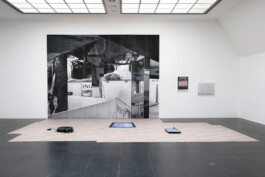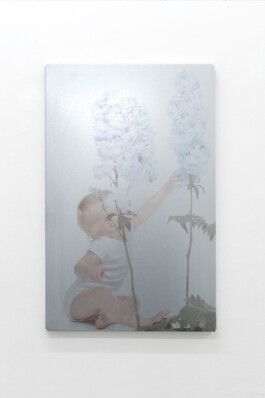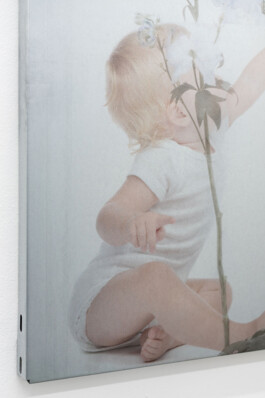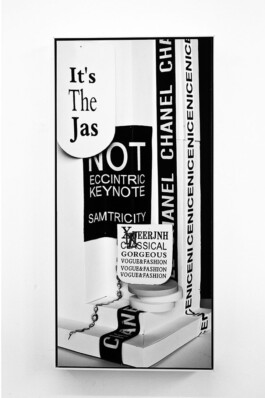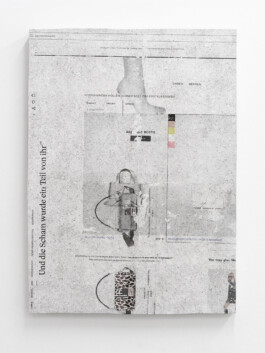
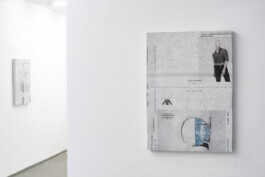
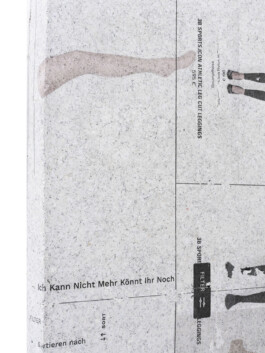


2024, papier-mâché/pulp, photo transfer printing, acrylic varnish, 50 cm x 72 cm
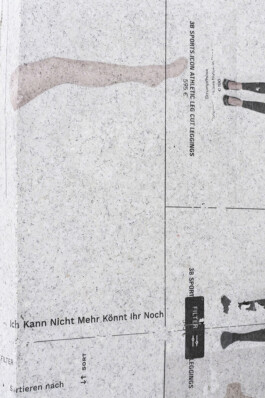
The randomly generated text–image collages originate from entering quotes, questions, and emotional states into the search interfaces of major luxury brands. The systems respond with absurd and resistant results, creating a friction between personal experience and the algorithmic logic of consumption.
The works are mounted on supports made from shredded documents from the artist’s own bureaucratic biography, processed into papier-mâché. The resulting massive, slightly deformed blocks resemble cast marble, turning fragments of a bureaucratic past into a physical substrate for the digital collages.
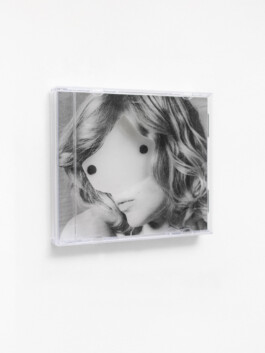
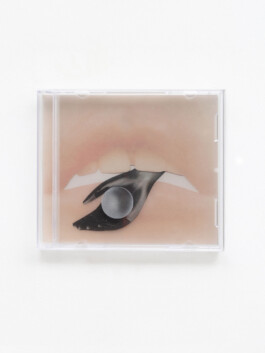
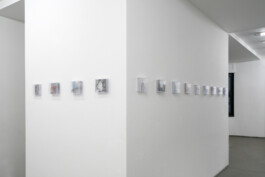
2024–today, Acrylic CD cases, photo collage, acrylic glue, transfer foil, each 14,2 cm x 12, 5 cm x 5 cm
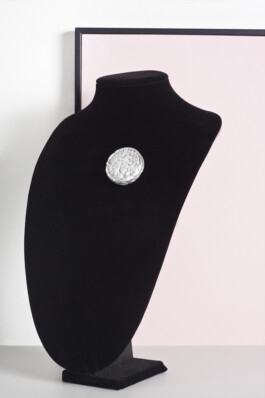
Jewel Cases consists of visual diary entries — thinking and reflecting in and through images. Like a track capturing a specific moment, each work condenses a temporal situation while raising questions about the larger systems in which it is embedded.
Framed by the now-vanishing medium of the acrylic CD case — the “jewel case” — each cover forms a closed block of stacked CD cases, transforming an obsolete carrier of music and imagery into a sculptural framework.
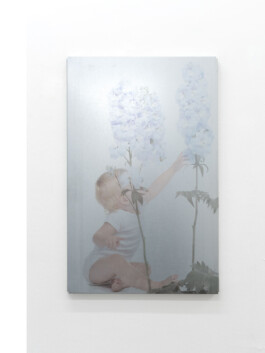
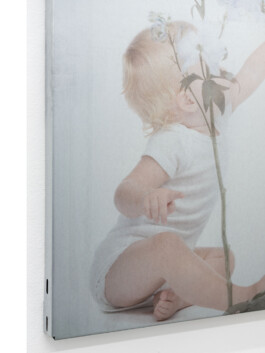


2024, Cut Archive prints, acrylic glass, aluminum,
30 cm x 40 cm x 6 cm
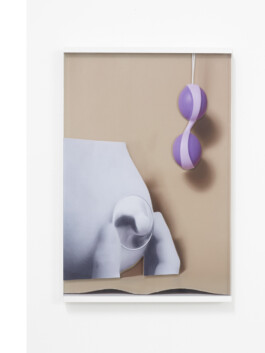
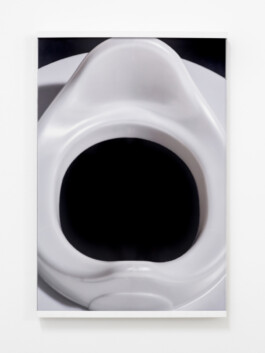
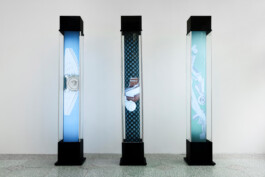
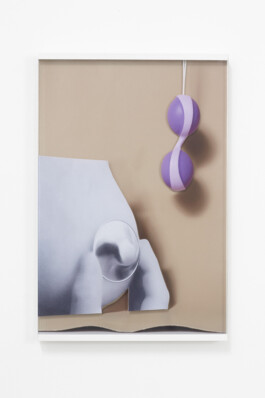
MOTHERLY is a body of work that re-stages the absurd product world surrounding parenthood. The works are still-life photographs whose individual pictorial layers are subsequently taken apart and stacked behind one another between glass plates, forming dense blocks.
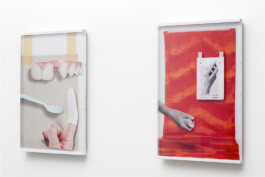
2024, C-Print, 30 x 40 cm


2018


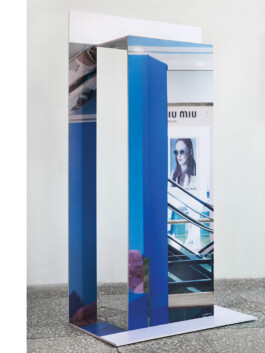
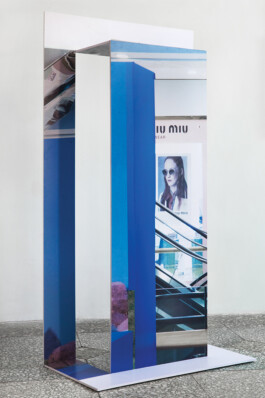
2017, Hard foam PVC, digital printing, 155 cm x 80 cm
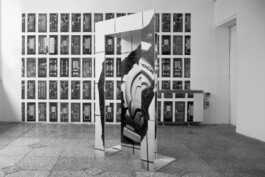
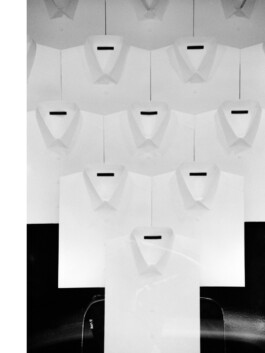
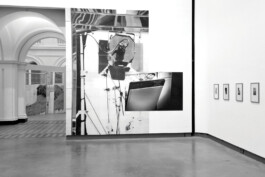
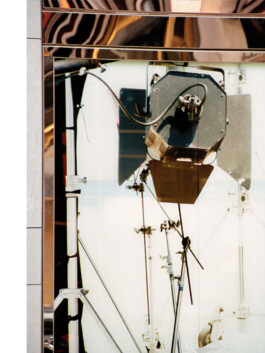
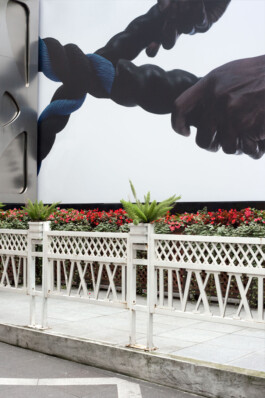
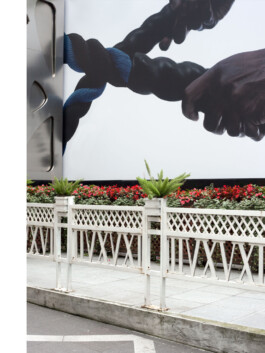
During a three-month residency in Beijing, I focused on the city’s hyper-consumerist environments and the striking tension between luxury and the ideals of communism. Photographic documentation reveals how this contradiction is inscribed in the urban architecture.
These two works included in the residency exhibition explore the concept of the (advertising) image as a space-defining element.
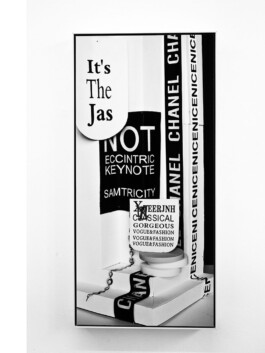
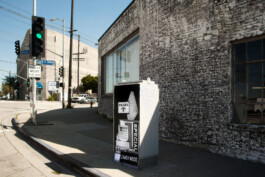
2018, Archive print, shadow gap frame, 80 cm x 30 cm
The works address the decorative use of English words in the Chinese fashion industry, where Latin script functions purely as a visual element. Lettering from emblems and patches was staged in a paper model and photographed analogically.
The display is based on a reconstruction of a bankrupt store in Chinatown, Los Angeles, reflecting the aesthetic and cultural translation of brand imagery.
2013 and 2018, 1200 A3 reader copies, paste
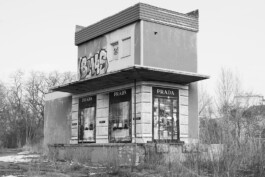
The temporary installation consisted of a façade covering made from A3 prints of a photographed Prada façade, applied in a 1:1 scale to the exterior of a vacant parking garage on a brownfield site in central Leipzig.
On February 16th, Prada Leipzig “opened” with a one-hour inauguration performance.
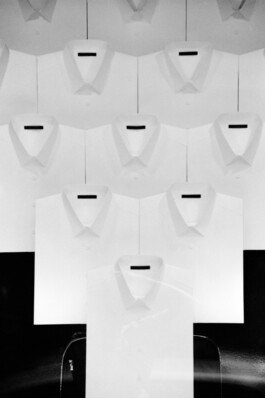
2013 to present, image archive, dimensions and printing technique variable
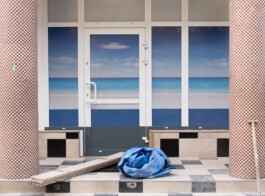
The title of the image archive references a term coined by Rem Koolhaas to describe the last global religion — the capitalist faith in growth through consumption. In Junkspace, I investigate the intersection of image and reality in public space.
The photographs have a collage-like quality and depict the disorienting reality from a subjective perspective. The continuously expanding archive serves as the foundation for installations and spatial interventions.


2024, papier-mâché/pulp, photo transfer printing, acrylic varnish, 50 cm x 72 cm
The randomly generated text–image collages originate from entering quotes, questions, and emotional states into the search interfaces of major luxury brands. The systems respond with absurd and resistant results, creating a friction between personal experience and the algorithmic logic of consumption.
The works are mounted on supports made from shredded documents from the artist’s own bureaucratic biography, processed into papier-mâché. The resulting massive, slightly deformed blocks resemble cast marble, turning fragments of a bureaucratic past into a physical substrate for the digital collages.


2024–today, Acrylic CD cases, photo collage, acrylic glue, transfer foil, each 14,2 cm x 12, 5 cm x 5 cm
Jewel Cases consists of visual diary entries — thinking and reflecting in and through images. Like a track capturing a specific moment, each work condenses a temporal situation while raising questions about the larger systems in which it is embedded.
Framed by the now-vanishing medium of the acrylic CD case — the “jewel case” — each cover forms a closed block of stacked CD cases, transforming an obsolete carrier of music and imagery into a sculptural framework.


2024, Cut Archive prints, acrylic glass, aluminum, 30 cm x 40 cm x 6 cm
MOTHERLY is a body of work that re-stages the absurd product world surrounding parenthood. The works are still-life photographs whose individual pictorial layers are subsequently taken apart and stacked behind one another between glass plates, forming dense blocks.


2024, C-Print, 30 x 40 cm

2018


2017, Hard foam PVC, digital printing,
155 cm x 80 cm
During a three-month residency in Beijing, I focused on the city’s hyper-consumerist environments and the striking tension between luxury and the ideals of communism. Photographic documentation reveals how this contradiction is inscribed in the urban architecture.
These two works included in the residency exhibition explore the concept of the (advertising) image as a space-defining element.


2018, Archive print, shadow gap frame,
80 cm x 30 cm
The works address the decorative use of English words in the Chinese fashion industry, where Latin script functions purely as a visual element. Lettering from emblems and patches was staged in a paper model and photographed analogically.
The display is based on a reconstruction of a bankrupt store in Chinatown, Los Angeles, reflecting the aesthetic and cultural translation of brand imagery.
2013 and 2018, 1200 A3 reader copies, paste
The temporary installation consisted of a façade covering made from A3 prints of a photographed Prada façade, applied in a 1:1 scale to the exterior of a vacant parking garage on a brownfield site in central Leipzig.
On February 16th, Prada Leipzig “opened” with a one-hour inauguration performance.


2013 to present, image archive, dimensions and printing technique variable
The title of the image archive references a term coined by Rem Koolhaas to describe the last global religion — the capitalist faith in growth through consumption. In Junkspace, I investigate the intersection of image and reality in public space.
The photographs have a collage-like quality and depict the disorienting reality from a subjective perspective. The continuously expanding archive serves as the foundation for installations and spatial interventions.
back
Kalinka Gieseler is an artist and photographer working at the intersection of photography, collage, and spatial installation. She studied Fine Arts at the Hochschule für Grafik und Buchkunst Leipzig. Central to her practice is the seductive power of commercial imagery and its role in shaping class, luxury, and desire.
Her work has been supported by national and international residencies and grants, including the Jan van Eyck Academy (Maastricht), DAAD Los Angeles, Stiftung Kunstfonds, and the Goethe-Institut China. She has received the Aenne Biermann Prize for Photography and the Marianne Brandt Prize, among others.
Gieseler’s work has been presented in solo and group exhibitions internationally, with recent solo projects including Panic in the Jewel Case (Haus 1, Berlin), Not Eccentric Keynote Samtricity (Goethe-Institut, Beijing), and Cool I–III (Los Angeles), as well as group exhibitions at Künstlerhaus Dortmund, Galerie Beck & Eggeling (Düsseldorf), and Grassimuseum Leipzig.
She is also active in teaching and research, investigating the translation of images into space, the politics of representation, and the mediation of desire, class, and luxury in contemporary visual culture.
email / instagram imprint ↑ privacy policy ↑
© Kalinka Gieseler
Selected works shown. Represented by VG Bild-Kunst. Full portfolio available on request.
Kalinka Gieseler is an artist and photographer working at the intersection of photography, collage, and spatial installation. She studied Fine Arts at the Hochschule für Grafik und Buchkunst Leipzig. Central to her practice is the seductive power of commercial imagery and its role in shaping class, luxury, and desire.
Her work has been supported by national and international residencies and grants, including the Jan van Eyck Academy (Maastricht), DAAD Los Angeles, Stiftung Kunstfonds, and the Goethe-Institut China. She has received the Aenne Biermann Prize for Photography and the Marianne Brandt Prize, among others.
Gieseler’s work has been presented in solo and group exhibitions internationally, with recent solo projects including Panic in the Jewel Case (Haus 1, Berlin), Not Eccentric Keynote Samtricity (Goethe-Institut, Beijing), and Cool I–III (Los Angeles), as well as group exhibitions at Künstlerhaus Dortmund, Galerie Beck & Eggeling (Düsseldorf), and Grassimuseum Leipzig.
She is also active in teaching and research, investigating the translation of images into space, the politics of representation, and the mediation of desire, class, and luxury in contemporary visual culture.
email / instagram imprint ↑ privacy policy ↑
© Kalinka Gieseler
Selected works shown.
Represented by VG Bild-Kunst.
Full portfolio available on request.